
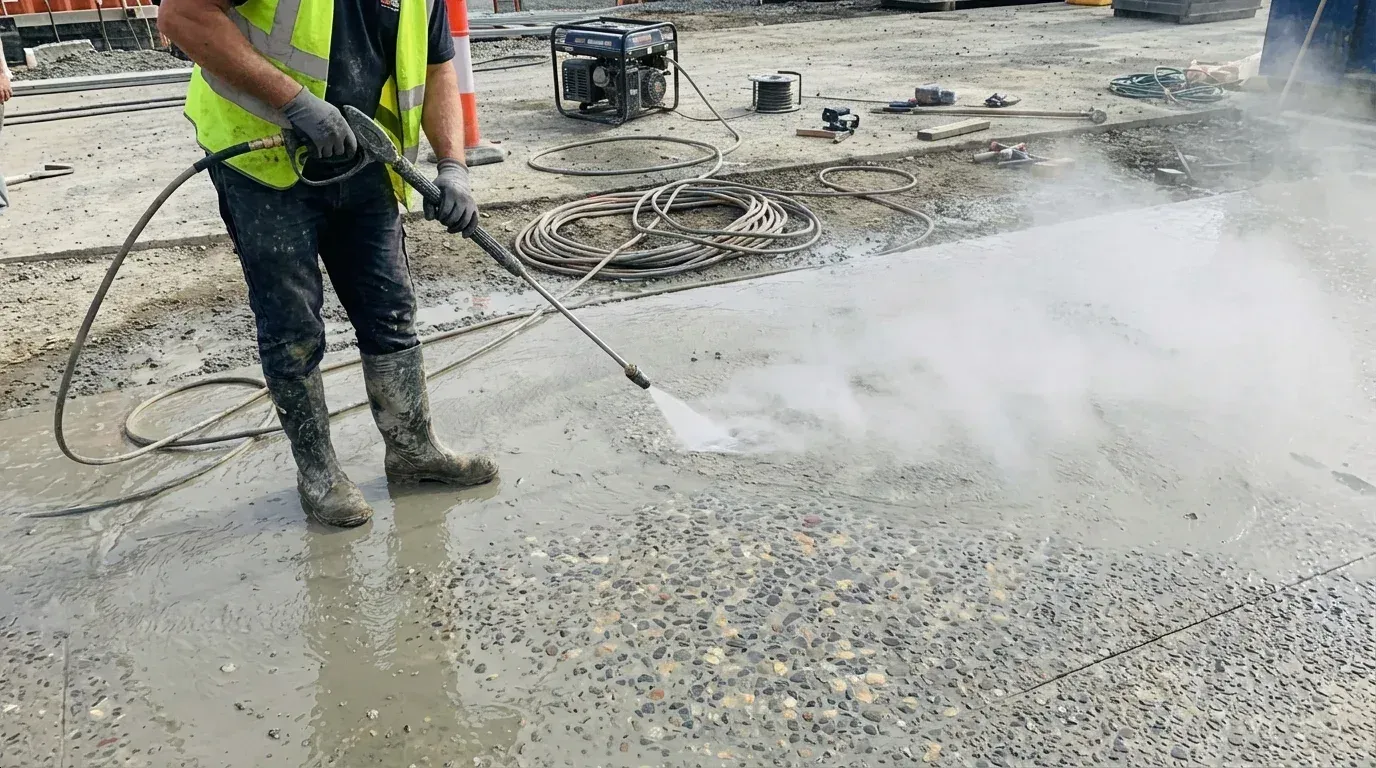
RV Pads & Parking Slabs in Victorville, CA
Victorville Superior Concrete Victorville Superior Concrete builds reinforced RV pads and parking slabs engineered for the weight of Class A motorhomes, fifth wheels, and toy haulers, and for the expansive clay soils common across the High Desert. As a licensed and insured RV pad installation Victorville CA contractor, we've poured pads that survive summer heat cycling and monsoon runoff without the cracking or settling that plagues thin, unreinforced slabs.
Every project starts with a soil-appropriate base design, not a one-size-fits-all pour. Whether you need a full concrete RV pad, a budget crushed concrete surface, or a paver extension tied into your existing driveway, we size and reinforce it to match your rig and your property.
RV Pad Installation Contractors in Victorville, CA
Victorville sits on expansive soil that shrinks and swells with moisture changes, and that movement is the single biggest cause of cracked, heaving RV pads in the High Desert. A concrete RV pad Victorville CA homeowners can trust starts below the surface, with proper subgrade evaluation and compaction before any concrete gets poured.
As an RV parking pad contractor Victorville CA residents call for both new installations and pad replacements, we treat base prep as the load-bearing foundation it is, not a step to rush through. A rebar reinforced slab tied into a properly compacted aggregate base resists the point-loading stress that heavy axles and stabilizer jacks put on concrete over years of parking and unparking.
We've installed pads for Class A diesel pushers, travel trailers, fifth wheels, and toy haulers throughout San Bernardino County, and each one gets engineered for its specific weight class rather than a generic 4-inch pour. That distinction matters most on Victorville's reactive soils, where undersized bases fail within a few seasons.
RV Pad & Parking Slab Material Options
Not every RV pad needs to be poured concrete, and we walk homeowners through the real tradeoffs between concrete, gravel, asphalt, crushed concrete, and paver surfaces before recommending a material. Budget, how often the pad will be loaded and unloaded, and whether you plan to add hookups all factor into which surface makes sense.
Base Prep, Rebar & Concrete Pouring Process
Every concrete RV pad we install follows the same sequence: excavate to design depth, compact the subgrade in lifts, place and compact an aggregate base, set rebar on chairs to keep it centered in the pour, then place and finish the concrete. Skipping compaction lifts or pouring rebar directly on grade are the two shortcuts that cause premature cracking on Victorville's soil.
Slab thickness is matched to load class rather than applied uniformly. A 4-inch concrete slab handles lighter travel trailers and utility parking, while a 6-inch concrete slab with heavier rebar spacing is standard for Class A motorhomes, fifth wheels, and toy haulers where axle weight and jack pressure concentrate stress on smaller sections of the pad.
RV Pad Sizing & Cost Per Square Foot in Victorville
RV parking pad cost Victorville CA quotes should be based on local per-square-foot pricing for reinforced concrete, not national averages that don't account for our soil conditions or base depth requirements. Pricing depends on slab thickness, rebar spacing, site access, excavation volume, and whether hookups are added, and we provide itemized per-square-foot numbers upfront rather than a vague range.
Why Choose Victorville RV Pad Contractors
We're a licensed and insured, family-owned contractor based in the High Desert, which means every RV pad crew that shows up on your property is our own, not a subcontracted crew unfamiliar with local soil conditions. That consistency shows up in workmanship, and it's backed by a workmanship warranty on every reinforced pad we pour.
Every project starts with a free estimate that includes a site visit, soil assessment, and an itemized per-square-foot quote, so you know the real cost before committing to a design or slab thickness.
Our RV Pads & Parking Slabs Process
Free Site Visit & Soil Assessment
We evaluate your property's soil conditions, drainage path, and RV dimensions on-site, then provide an itemized per-square-foot estimate before any work is scheduled.
Design Pad Size, Thickness & Reinforcement
We size the pad to your specific RV class, set slab thickness at 4 or 6 inches based on load requirements, and plan rebar spacing along with any hookup sleeves.
Permit Filing & HOA Coordination
We pull required San Bernardino County permits and handle any HOA architectural review documentation so the project is fully compliant before excavation starts.
Excavate, Compact Base & Set Rebar
We excavate to design depth, compact the subgrade and aggregate base in lifts, and set rebar on chairs to keep reinforcement properly positioned within the pour.
Pour, Cure & Finish the Slab
We pour and grade the concrete for proper drainage, apply curing methods suited to desert heat, and cut control joints before final walkthrough and warranty documentation.
RV Pads & Parking Slabs — Common Questions
How much does it cost to install an RV pad in Victorville, CA?
What is the best surface for an RV parking pad—concrete, gravel, or asphalt?
How thick should a concrete RV pad be?
How much does a 12x40 RV pad cost installed?
What size should an RV parking slab be for a fifth wheel?
Is crushed concrete a good option for an RV pad?
On a scale of 1-10, how many years is an RV pad going to last?
Get a Free RV Pad Quote
Talk to a licensed, family-owned RV pad contractor about your project. We'll assess your soil, size the pad to your rig, and hand you an itemized per-square-foot estimate, no guesswork, no national-average pricing. Serving Victorville, Hesperia, Apple Valley, Adelanto, and Oak Hills.